Introduction
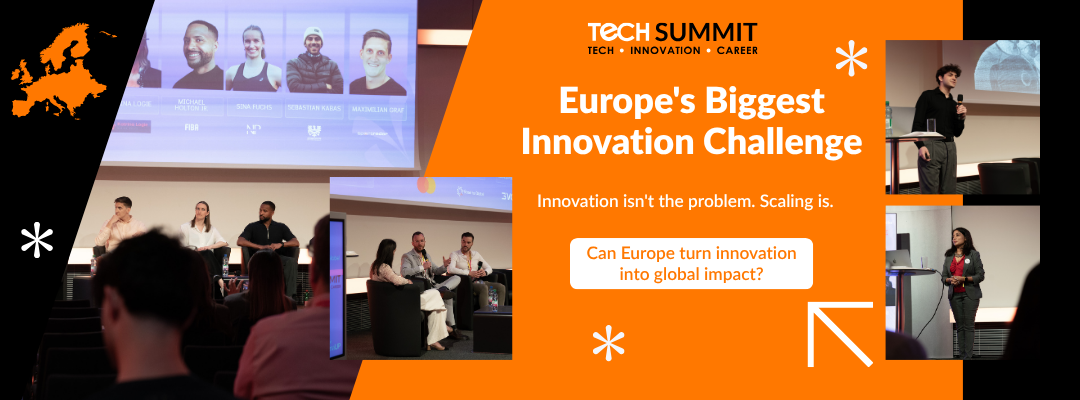
Europe’s Biggest Innovation Challenge is turning world-class innovation into globally competitive businesses. Across the continent, world-class universities produce cutting-edge research, entrepreneurs launch ambitious startups, and governments invest heavily in science and technology. European companies continue to lead breakthroughs in clean energy, advanced manufacturing, biotechnology, artificial intelligence, and deep tech.
Europe has no shortage of innovation. Yet despite these strengths, Europe faces a long-standing challenge: transforming innovation into globally dominant businesses. While groundbreaking ideas are abundant, scaling them into international success stories remains more difficult than many founders expect.
1. Innovation Is Not the Problem
Europe consistently ranks among the world’s leading regions for research and development. Universities, research institutions, and innovation ecosystems generate thousands of patents, scientific discoveries, and high-potential startups every year.
The continent possesses the knowledge, talent, and entrepreneurial ambition needed to compete globally. However, Europe’s Biggest Innovation Challenge begins after innovation leaves the laboratory and enters the marketplace.
2. The Scaling Challenge
Compared to the United States and increasingly China, Europe has produced relatively few technology companies that achieve global scale.
Many promising startups validate their products and attract early investment, yet struggle to expand internationally. Some eventually relocate to larger markets where funding, customer access, and growth opportunities are easier to obtain.
The issue is not creating startups—it is helping them become global market leaders.
3. Market Fragmentation
One of the biggest aspects of Europe’s Biggest Innovation Challenge is market fragmentation.
- Different regulations
- Different legal systems
- Multiple languages
- Different customer behaviours
- Local business cultures
Although the European Union provides economic integration, expanding across borders often remains more complex than founders initially expect.
4. Access to Growth Capital
European venture capital has grown significantly over the past decade, creating stronger early-stage investment opportunities.
However, many founders continue to highlight challenges when raising large late-stage funding rounds needed for international expansion.
5. Talent: A Competitive Advantage
Europe benefits from highly educated professionals and world-class engineering talent.
- Software Engineers
- AI Specialists
- Product Leaders
- Scaling Executives
- Research Experts
Global competition for experienced professionals continues to increase, making talent acquisition another important challenge.
6. Regulation and Innovation
Europe has positioned itself as a leader in privacy, consumer protection, and ethical technology.
These regulations create trust while also increasing compliance requirements for businesses seeking rapid international growth.
7. Reasons for Optimism
Despite these challenges, Europe’s innovation ecosystem continues to mature.
- Berlin
- Vienna
- Amsterdam
- Stockholm
- Paris
- Lisbon
Every year, more startups demonstrate that globally competitive businesses can be built from Europe.
Looking Ahead
Europe’s Biggest Innovation Challenge will require stronger collaboration between governments, investors, universities, and private industry. Improving access to funding, reducing barriers to cross-border expansion, and investing in entrepreneurial talent will help European businesses compete internationally.
Europe already has world-class ideas, research, and innovation. The next step is ensuring that these innovations become globally successful companies capable of creating long-term economic growth and global competitiveness.
Conclusion
Europe’s Biggest Innovation Challenge is not generating ideas—it is transforming innovation into global impact.
If Europe successfully combines research excellence, entrepreneurship, investment, talent, and international collaboration, it can produce many more globally recognised technology leaders over the coming decade.
The question is no longer whether Europe can innovate.
The real question is whether Europe can consistently transform innovation into global success.